











 +
 +
























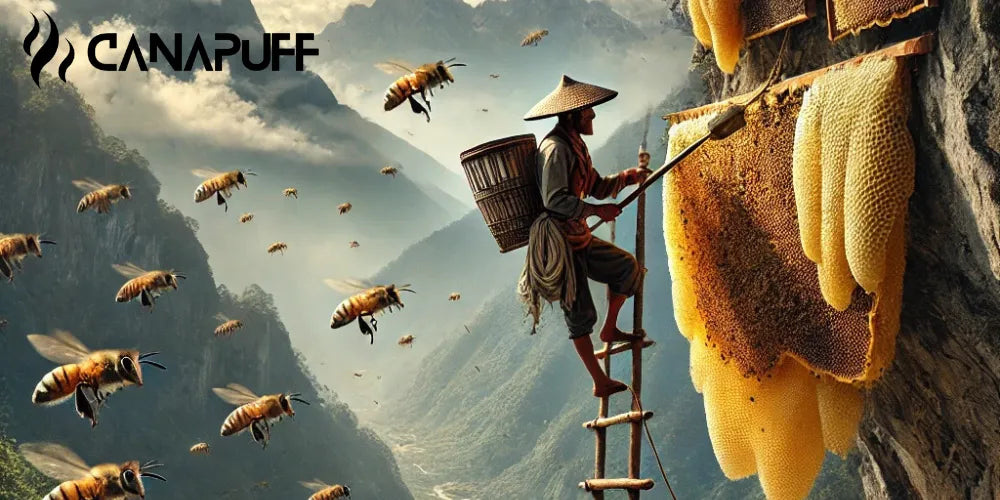
Mad honey is a dark, reddish honey from the Himalayas and from the Black Sea region of Turkey. It is made by bees that collect nectar from certain rhododendron flowers. The nectar contains natural substances called grayanotoxins, which pass into the honey. In this article you can read where mad honey comes from, how it is harvested in Nepal and what science says about grayanotoxins.

What is mad honey?
Mad honey comes from the nectar of rhododendron species such as Rhododendron ponticum and others that grow in the mountains (Wikipedia: Mad honey, Wikipedia: Rhododendron ponticum). In Nepal, it is mainly produced by the Himalayan giant honey bee (Apis laboriosa), the largest honey bee in the world (Wikipedia: Apis laboriosa). These bees build their combs on steep cliffs at high altitude.
History and culture
Mad honey has a long written history. The Greek writer Xenophon reported around 400 BC that Greek soldiers fell ill after eating honey near the Black Sea. In Nepal, the honey harvest is an old tradition of the Gurung people in the central hills of the country. The harvest is often accompanied by rituals to ask the spirits of the cliff for protection.
The traditional harvest
Honey hunters climb rope ladders made of bamboo and grass down the cliffs. They use smoke from burning leaves to move the bees away from the combs and then cut the combs with long bamboo poles. The work takes place at great height and is physically very demanding. Today fewer young people learn the craft, and tourism has changed how and how often the harvest takes place.

Grayanotoxins: what science says
Grayanotoxins are natural toxins found in rhododendron and related plants (Wikipedia: Grayanotoxin). They act on sodium channels in nerve and muscle cells. Medical literature describes many cases of so called mad honey poisoning. Typical symptoms in these reports are dizziness, nausea, low blood pressure and a slow heart rate, and some patients needed hospital treatment. The amount of grayanotoxin in a honey can vary a lot, so it is not possible to know in advance how a jar will affect a person. Mad honey is not a product we sell.
Environment and ethics
The Himalayan giant honey bee depends on intact cliffs and forests. Overharvesting and the loss of habitat put pressure on the bee populations. Conservation projects in Nepal work with local communities to keep the harvest sustainable. Visitors who want to see a honey hunt should choose local guides and respect the rules of the communities.
Frequently asked questions
Why is it called mad honey?
The name comes from the grayanotoxins in the honey. They come from rhododendron nectar and can cause poisoning.
Which bees make mad honey in Nepal?
In Nepal it is mainly made by the Himalayan giant honey bee, Apis laboriosa, which builds its combs on high cliffs.
Who harvests mad honey in Nepal?
The traditional harvest is carried out by honey hunters, mainly from the Gurung communities in the central hills of Nepal.
Is mad honey dangerous?
Medical literature reports many cases of mad honey poisoning. The content of grayanotoxin varies from honey to honey.