














 +
+ +
+









What is delta-8 THC?
Delta-8 THC (delta-8-tetrahydrocannabinol, often written as Δ8-THC) is a cannabinoid that is closely related to delta-9 THC, the main compound responsible for the "high" of cannabis. Both molecules have the same atoms. The difference is the position of one double bond in the ring structure: in delta-9 THC it sits at the ninth carbon, in delta-8 THC at the eighth. That makes delta-8 THC an isomer of delta-9 THC.
The cannabis plant only produces tiny amounts of delta-8 THC. The US Centers for Disease Control and Prevention (CDC) notes that it exists naturally in the cannabis plant in only small quantities. So the delta-8 THC found in products is almost always made in a lab rather than extracted directly from the plant.
How is delta-8 THC made?
Most delta-8 THC is made from CBD extracted from hemp. Using a solvent, an acid and heat, CBD can be converted into delta-8 THC, together with delta-9 THC and other THC isomers. The European Union Drugs Agency describes this as an acid-catalysed cyclisation of CBD that produces delta-8 THC as the main product, along with a range of by-products.
Those by-products are one of the main concerns. The US Food and Drug Administration (FDA) warns that this conversion may involve potentially unsafe chemicals and may take place in uncontrolled or unsanitary settings, which can leave unwanted substances in the final product. Because delta-8 THC is semi-synthetic, it belongs to the same broad family as other lab-made cannabinoids discussed in our article on hemp-derived THC products.
Effects of delta-8 THC
Delta-8 THC is psychoactive. It binds to the same CB1 receptors in the brain as delta-9 THC, and the FDA states that it has psychoactive and intoxicating effects similar to delta-9 THC.
It is often described as somewhat milder than delta-9 THC. The CDC estimates that delta-8 THC is about 50 to 75% as psychoactive as delta-9 THC. "Milder" does not mean "weak" or "harmless", though. Products can contain high concentrations, and the CDC points out that delta-8 THC may carry similar risks of impairment as delta-9 THC.
Users commonly report:
- Relaxation and a change in mood
- Altered perception and a sense of being "high"
- Increased appetite
- Dry mouth and red eyes
Reported unwanted effects include dizziness, drowsiness, anxiety, a racing heart, confusion and, at higher doses, vomiting or loss of consciousness. The FDA has received adverse event reports involving symptoms like hallucinations, vomiting, trouble standing and loss of consciousness. Effects also vary a lot between people and depend on dose, format and tolerance. If you want to know how delta-8 can feel the next day, our article on delta-8 THC next-day effects looks at that in detail.
Delta-8 THC vs delta-9 THC
The two compounds are chemically very close, but there are differences that matter in practice:
| Aspect | Delta-8 THC | Delta-9 THC |
|---|---|---|
| Natural amount in cannabis | Very small | The main psychoactive cannabinoid |
| How it is usually obtained | Converted from CBD in a lab | Extracted from the plant |
| Psychoactive strength | Estimated at roughly 50 to 75% of delta-9 | Reference point |
| Research on safety | Limited | Much more extensive |
For a more detailed comparison, read our guide delta-8 vs delta-9.
Is delta-8 THC legal?
This is where a lot of misinformation circulates, so let's be clear.
Delta-8 THC in Europe
Delta-8 THC is not a legal loophole in Europe. It is one of the THC isomers listed under the 1971 UN Convention on Psychotropic Substances. The European Union Drugs Agency notes that delta-8 THC is specifically scheduled under the 1971 UN Convention and therefore should be controlled at national level across Europe, and that its availability in Europe appears to be limited.
It is also a common mistake to think that a product is legal just because it comes from hemp or contains less than a certain percentage of delta-9 THC. Those thresholds refer to delta-9 THC in hemp plants and products. They do not make other psychoactive cannabinoids legal. National rules differ and change, so always check the current law in your country. Our country-by-country overview of THC rules in Europe is a good starting point.
Delta-8 THC in the United States
Delta-8 THC became widely available in the US after hemp cultivation was legalised there in 2018. Producers argued that hemp-derived cannabinoids were not controlled as long as the final product contained no more than 0.3% delta-9 THC by dry weight. That interpretation has been disputed, and the rules now differ from state to state. The FDA has not evaluated or approved delta-8 THC products for safe use.
Delta-8 THC products
Where delta-8 THC is sold, it comes in a variety of formats. Each format behaves differently, which matters for both effects and safety.
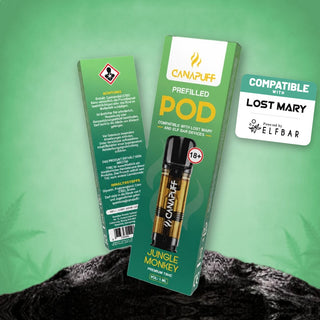
Vape cartridges with delta-8 THC
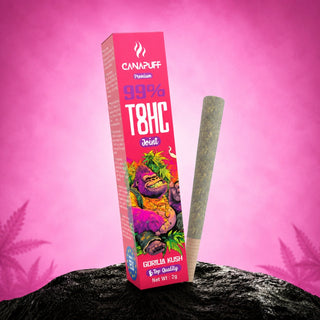
Vape cartridges are filled with delta-8 THC distillate and used with a vape battery. Inhaled cannabinoids act quickly, usually within minutes, which makes the effect easier to notice and to stop. The quality of the distillate and of the hardware matters a lot here, because by-products from the conversion process and additives can end up in the vapour.
Edibles and tinctures with delta-8 THC
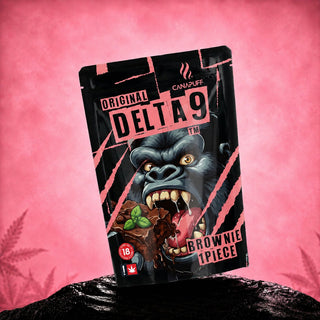
Edibles, such as gummies and chocolates, take much longer to kick in, often an hour or more, and the effects last longer than with vaping. That delay is the classic trap: people think nothing is happening, take more, and then feel far too much. Tinctures are liquid extracts that are taken under the tongue or added to food. Our article on delta-8 THC gummies covers edible formats in more depth.
The FDA also warns that many delta-8 products look like sweets or snacks, which makes them attractive to children. Any cannabinoid edible should be kept well out of reach of children and pets.
Conclusion
Delta-8 THC is a real cannabinoid with real effects, but it is not the harmless "legal THC" it is sometimes marketed as. Here is what to keep in mind.
Key facts about delta-8 THC
- It is an isomer of delta-9 THC and is psychoactive.
- Nearly all delta-8 THC on the market is made from CBD in a lab, which raises questions about purity and by-products.
- It is often described as milder than delta-9 THC, but it can still impair you.
- Research on its safety is limited, and health authorities have reported adverse events.
- In Europe it is covered by international drug control, and national rules apply.
Final thoughts on delta-8 THC
If you are curious about delta-8 THC, start by checking the legal situation where you live. It is not the same everywhere, and it changes. Do not drive or operate machinery after using any psychoactive cannabinoid, do not mix it with alcohol, and avoid it if you are pregnant, breastfeeding, under 18 or taking medication. If you are subject to drug testing, keep in mind that delta-8 THC can lead to a positive result, as explained in our article on CBD vs delta-8 and drug tests.
Sources
- 5 Things to Know about Delta-8 Tetrahydrocannabinol: Delta-8 THC, US Food and Drug Administration (FDA)
- Increases in Availability of Cannabis Products Containing Delta-8 THC and Reported Cases of Adverse Events, US Centers for Disease Control and Prevention (CDC)
- Hexahydrocannabinol (HHC) and related substances, European Union Drugs Agency (EUDA)