














 +
+ +
+







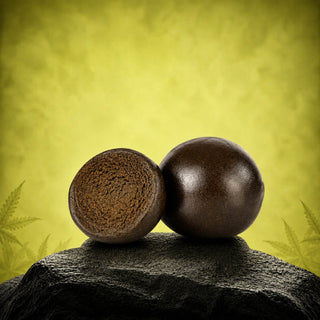
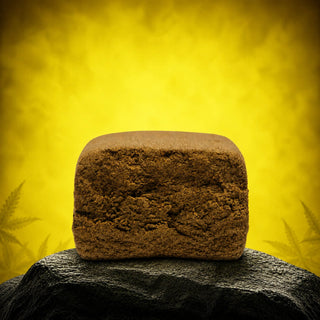
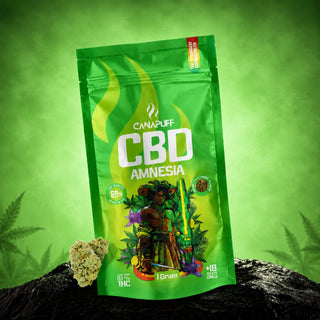
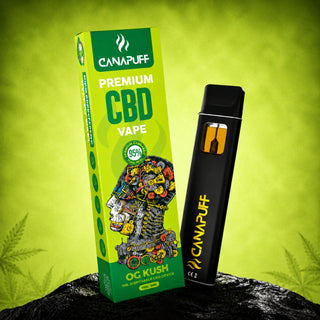
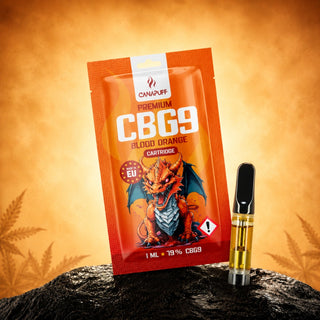



THCA hash is pressed cannabis resin in which the dominant cannabinoid is tetrahydrocannabinolic acid, the acidic precursor that the living plant actually produces. It stays non-intoxicating as long as it stays cold, because THCA carries an extra carboxyl group that blocks it from binding properly to the CB1 receptor. Apply heat with a lighter, a dab nail or an oven, and that carboxyl group is released as carbon dioxide. What remains is delta-9-THC.
That single chemical step explains almost everything about the product: why the label can say 99 percent, why the legal discussion is complicated, and why a cold piece of hash in your hand behaves completely differently from the smoke it produces.
Key facts
- One gram of pure THCA cannot become one gram of THC: part of the molecule leaves as carbon dioxide during heating, so the maximum yield is roughly seven-eighths of the starting weight.
- A 99 percent figure on the label describes the purity of the cannabinoid input, not the composition of the finished gram.
- Unheated THCA is not intoxicating. Heat is what converts it into delta-9-THC.
- In Germany, cannabis and THC are regulated under the KCanG and the MedCanG.
- Canapuff sells seven THCA hash varieties, from 1 gram units upwards.
What is THCA hash
THCA hash is a concentrate made from the resin glands of cannabis, in which the cannabinoid content is mostly or entirely THCA rather than already-decarboxylated THC. The raw material is trichome heads: the mushroom-shaped glands that sit on the surface of flowers and sugar leaves and hold the plant's cannabinoids and terpenes. Separate those heads from the plant matter, collect them, press them, and you have hash.
The acid form is the natural state. In a fresh, living cannabis plant there is almost no delta-9-THC at all. The enzyme THCA synthase builds THCA from cannabigerolic acid, and the plant stores it in that acidic form. Drying, maturation, long storage and sunlight convert a slow trickle of it into THC over time. Fire converts the rest in a second.
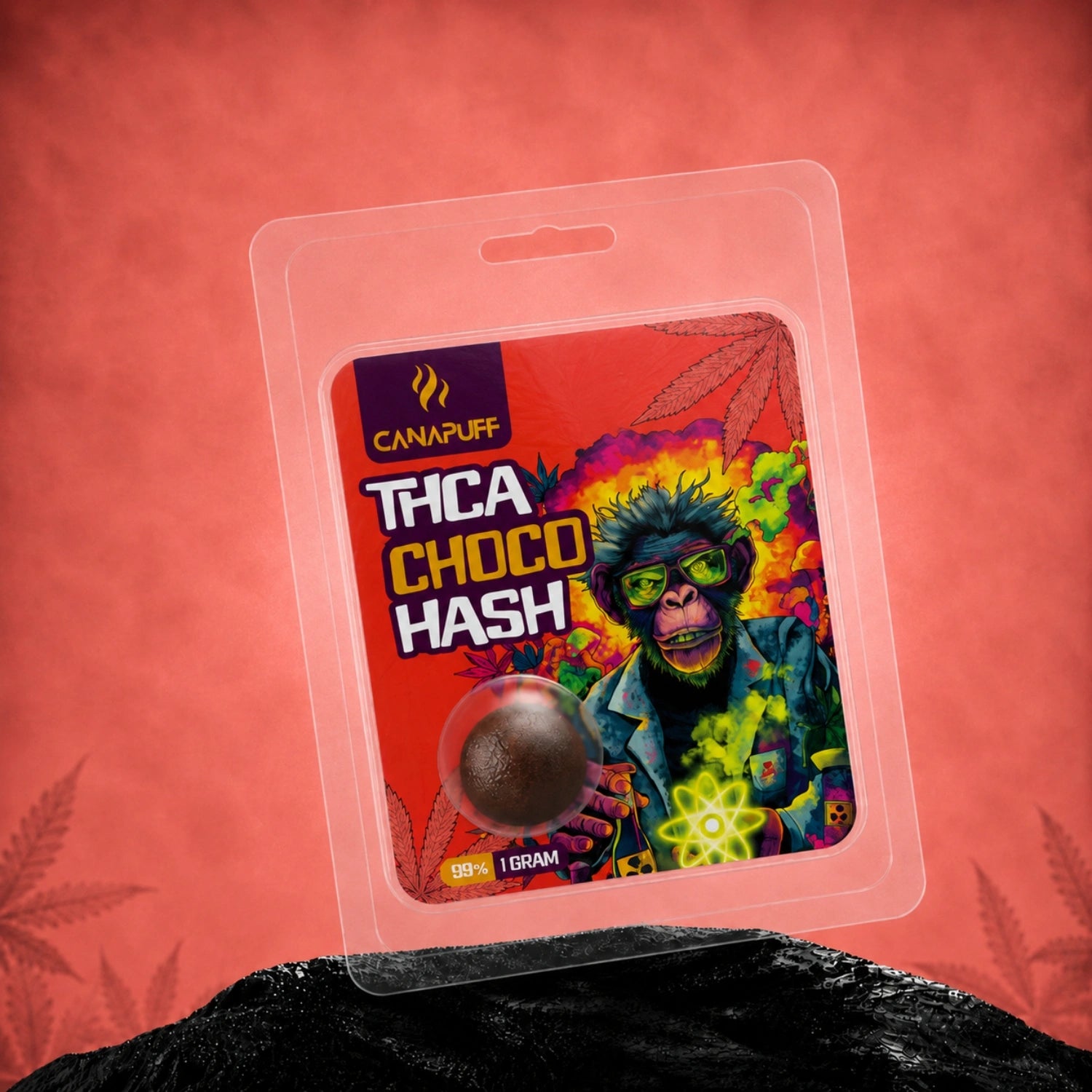
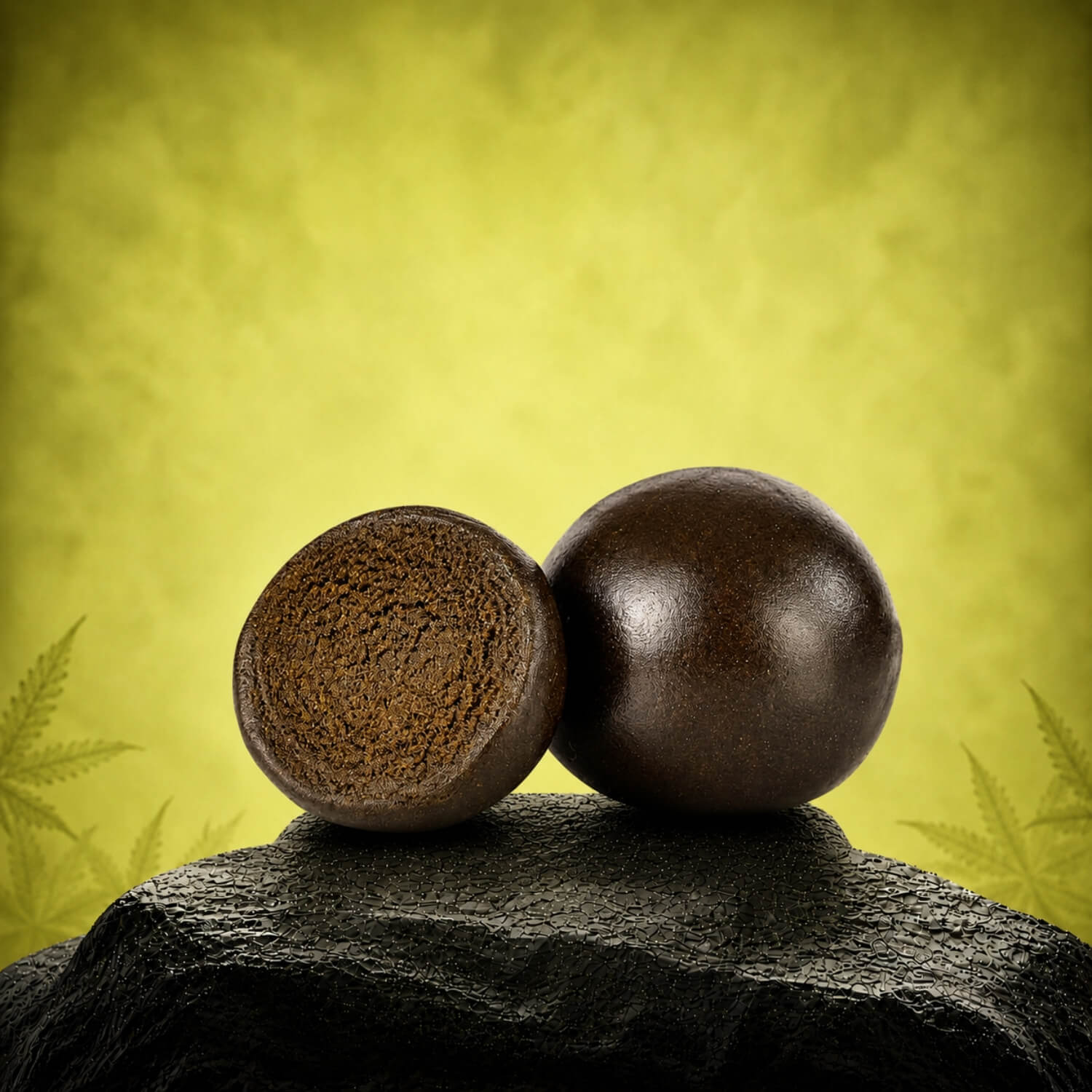
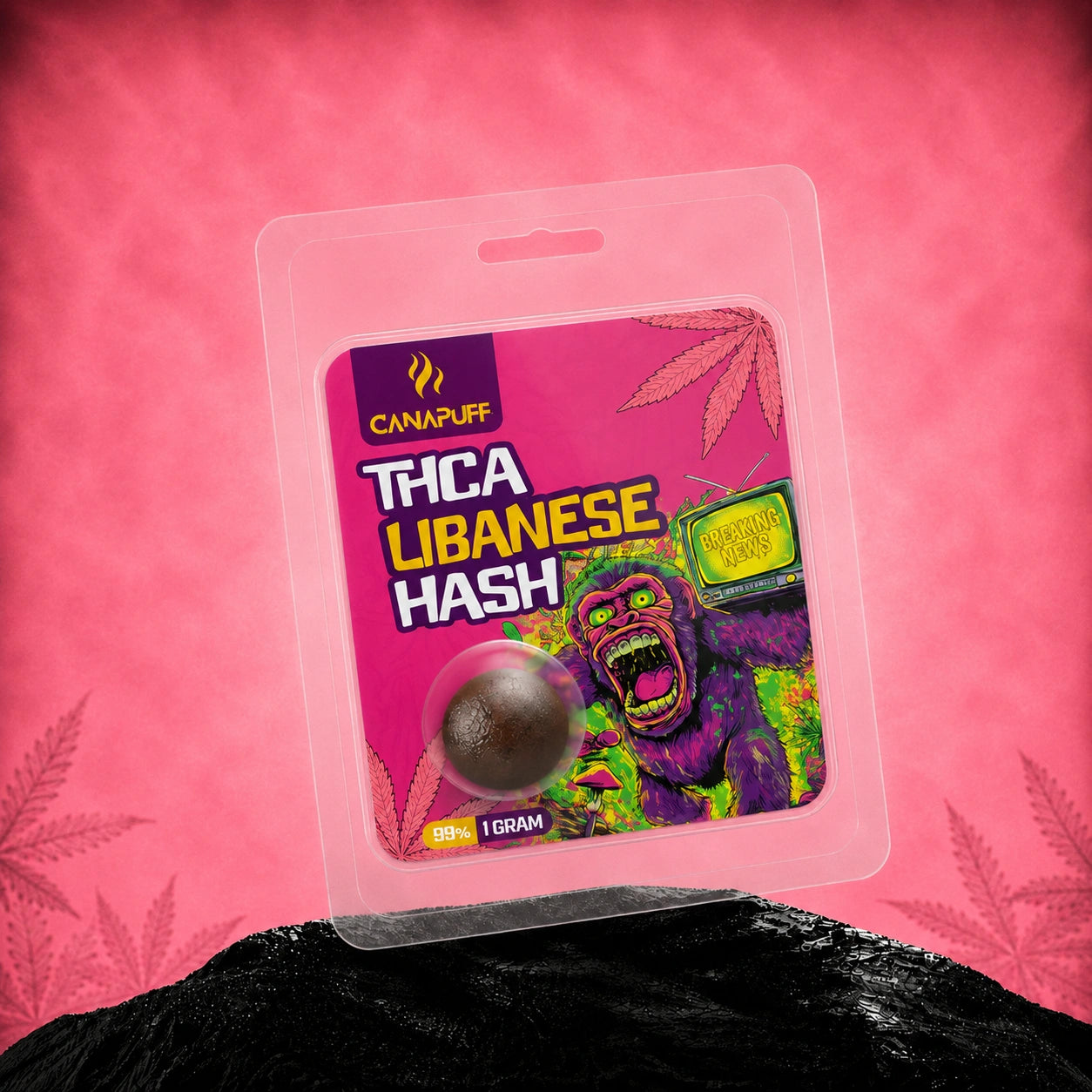
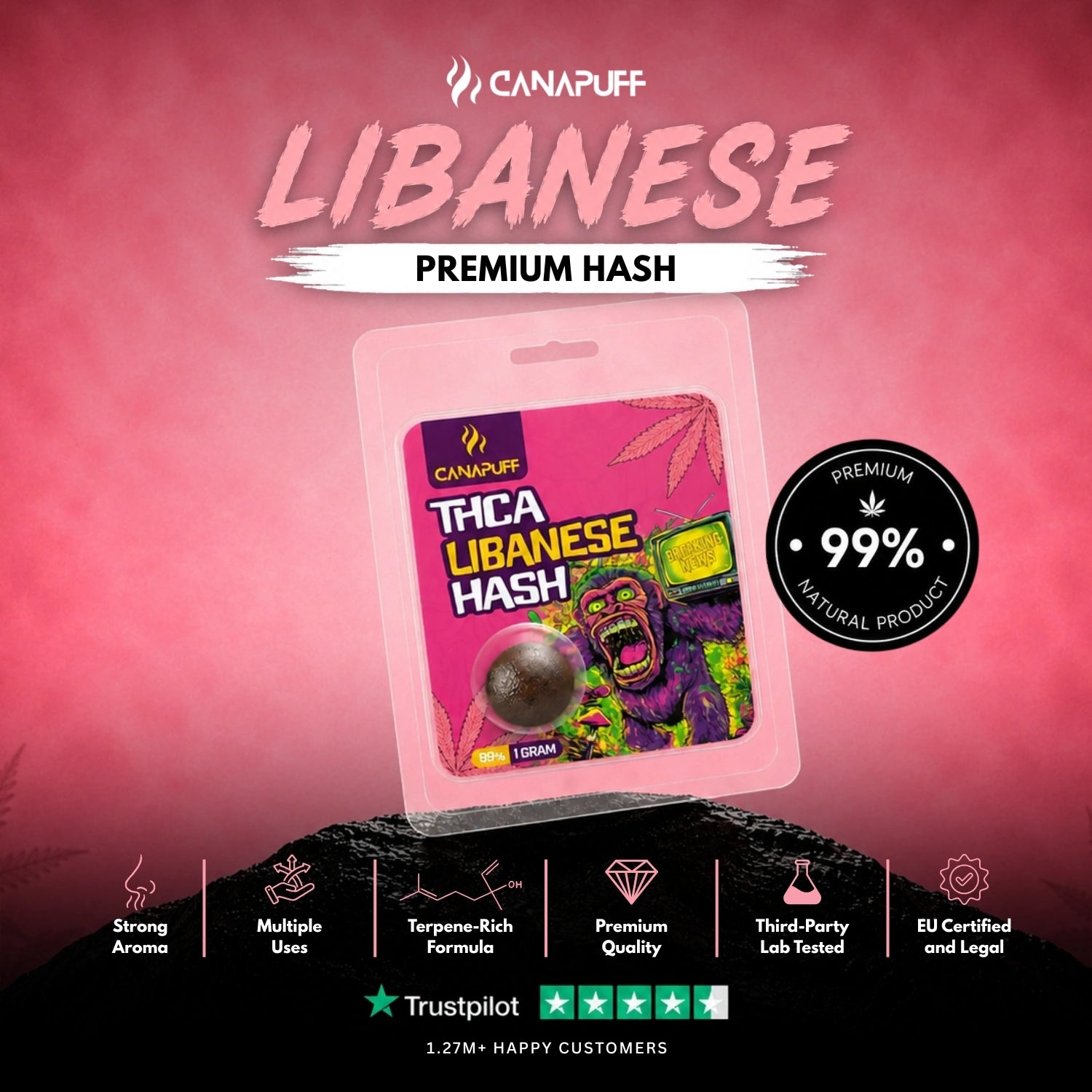
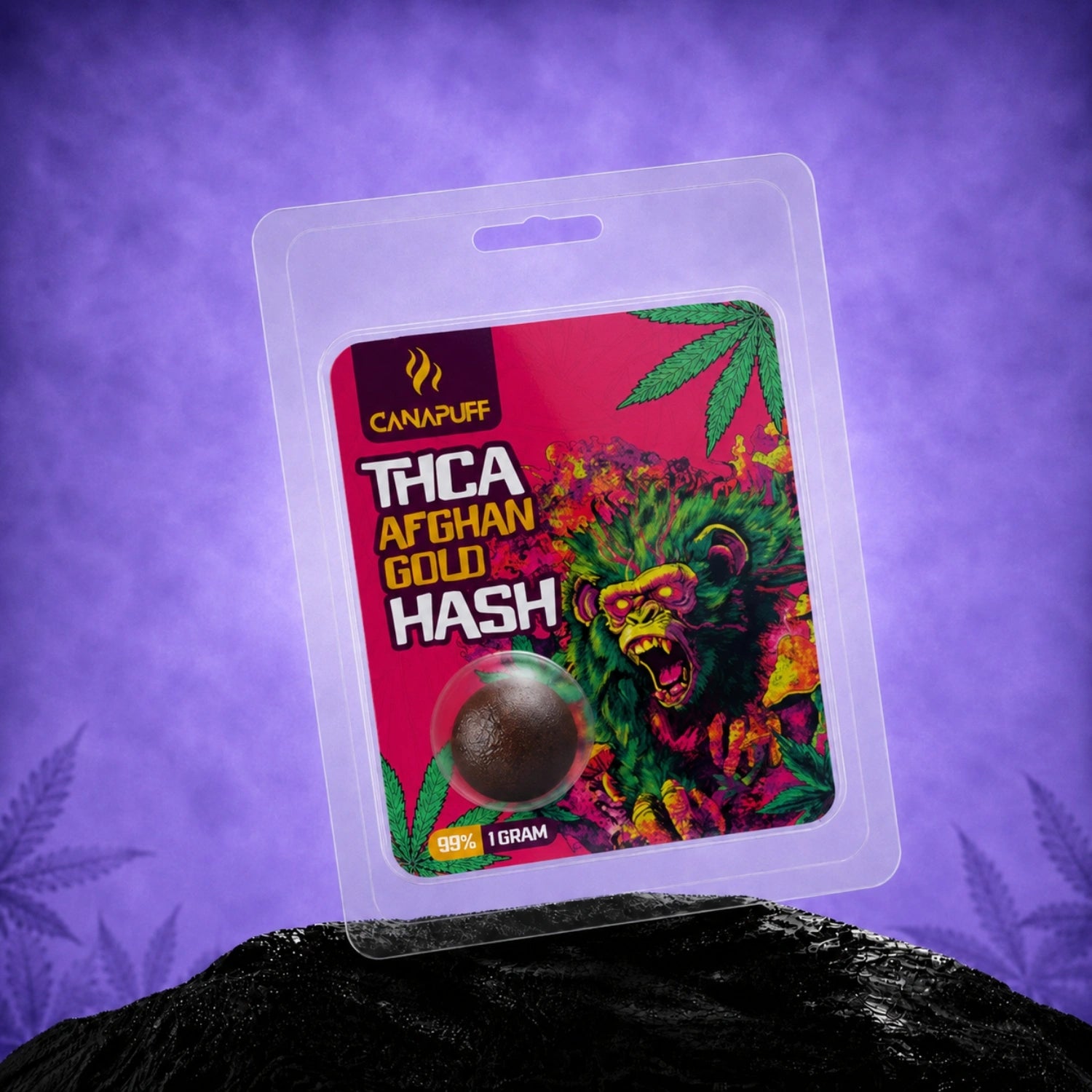
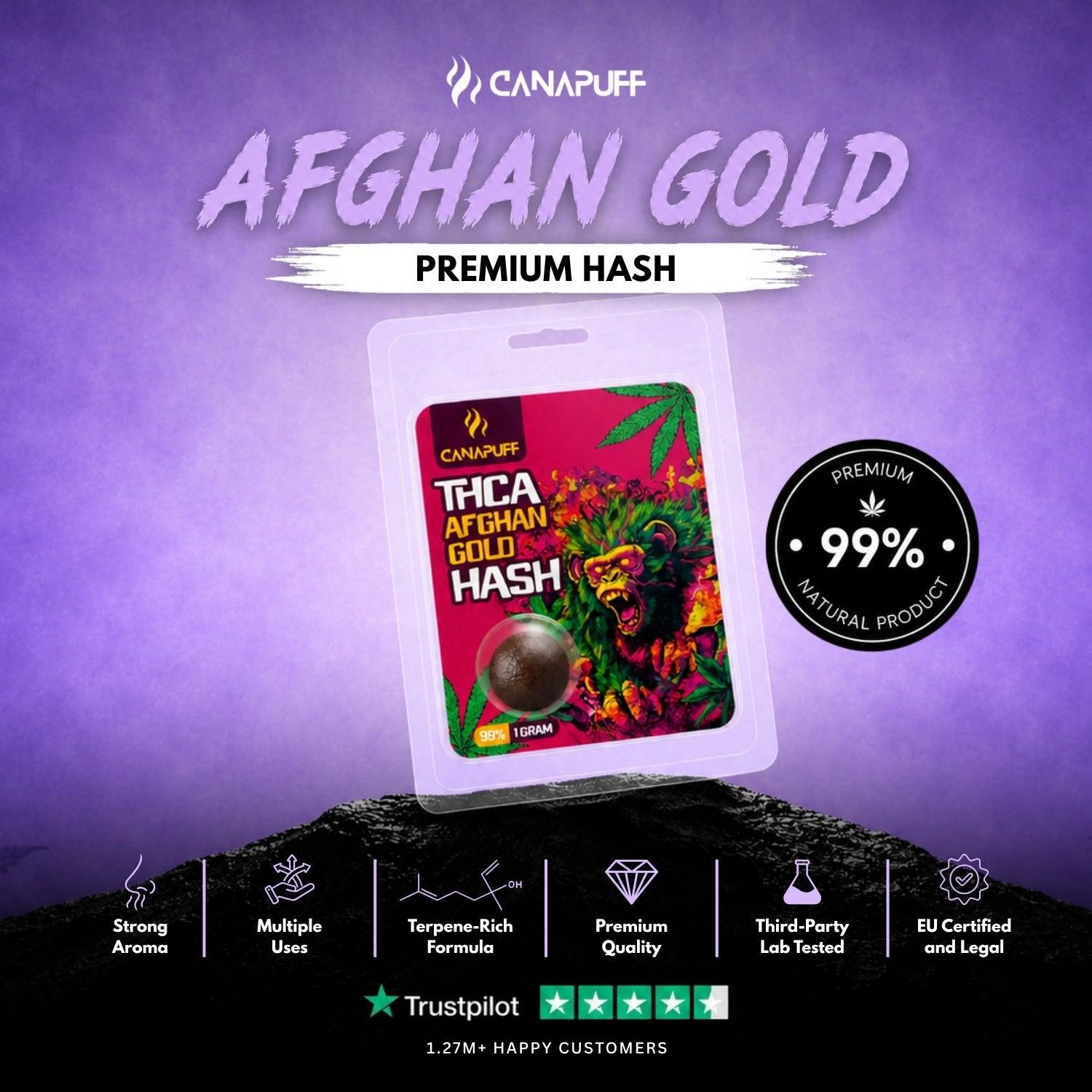
On the Canapuff side, the range splits into two groups. Four products carry a declared 99 percent figure: THCA Hash Libanese, Banana, Afghan Gold and Choco, each in 1 gram units. Alongside them sit three texture-led pieces: Black Afghan Hash, La Mousse Hash and Semi Dry Hash. The whole group is in the THCA hash collection.
What the 99 percent on the label refers to
The figure describes the purity of the cannabinoid material that was used to make the piece, not the weight of the finished gram. A 99 percent THCA input is still combined with terpenes, resin and binding material to give the hash its colour, smell and texture. Read the number as a statement about the raw extract, then check the certificate of analysis for the finished batch, which is the only document that tells you what is actually in the gram you hold.
Purity figures that high come from crystallisation, not from sieving. Dry sift from flower has a far lower cannabinoid content than crystallised THCA. When a label claims 99 percent, isolated THCA has been reintroduced into a hash base.
How THCA hash is made
Two production routes dominate: mechanical separation of trichomes from plant material, and reconstitution of a hash body around purified THCA crystal. The traditional methods are old and simple in principle.

- Dry sift: dried flower is agitated over a stack of mesh screens. The brittle trichome heads detach and pass through. Finer grades pass through screens with smaller micron ratings. The collected powder is kief.
- Ice water extraction: flower is stirred with ice and water, which makes the resin heads rigid enough to detach. Filter bags in descending micron sizes catch the material. The result is bubble hash.
- Hand rubbing: live plants are rubbed between the palms until resin accumulates, then scraped. This is charas, the method behind much traditional Himalayan hash.
- Pressing: whichever powder you start from, heat and pressure melt the trichome heads together into a solid block or a pliable slab.
For a full walkthrough of each technique, our guide to how to make hash with bubble, dry sift, rosin and charas methods covers the equipment and the yields.
The crystallisation route is different. Crude extract is dissolved in a solvent and chilled, and the THCA precipitates as crystals because it is less soluble than the oils around it. Repeated washing lifts purity towards 99 percent. That crystal is then homogenised with terpenes and a resin carrier and pressed into something that looks, smells and crumbles like hash. The texture names in the Canapuff range reflect how far that pressing goes: Semi Dry Hash stays firmer and more friable, while La Mousse Hash is aerated and soft.
THCA hash vs regular hash
The difference is not the plant and not the pressing, but how much of the cannabinoid content has already converted from acid to neutral form before you buy it. Classic Moroccan or Afghan hash is made from flower that has been dried and matured for months, sometimes longer. During that time a measurable share of the THCA degrades into delta-9-THC. A lab report on aged traditional hash normally shows both compounds side by side.
THCA hash is handled to prevent exactly that. Cold processing, quick pressing, cool storage, no long sun exposure. The goal is to keep the acid intact until the consumer applies heat.
| Feature | THCA hash | Traditional hash |
|---|---|---|
| Dominant cannabinoid before heating | THCA | Mix of THCA and delta-9-THC |
| Typical production | Cold sift, ice water or crystal reconstitution | Sift or hand rub, long maturation |
| Declared cannabinoid figure | Up to 99 percent on crystal-based products | Usually a single-digit to low double-digit percentage |
| Colour range | Pale blond to dark brown depending on base | Brown to near black |
| Behaviour when cold | No intoxicating effect without heat | Partly active already |
| Behaviour when heated | THCA converts to delta-9-THC | Remaining THCA converts, rest already active |
Appearance alone tells you little. A dark, oily slab can be a modern crystal-based product coloured by its terpene fraction, and a pale sandy block can be an old-school sift.
THCA hash vs THCA flower
Flower is the whole plant material with the resin still attached; hash is the resin with the plant material removed. That one structural difference drives everything else.

- Concentration: a gram of hash contains far more trichome mass than a gram of flower, because none of the weight is cellulose, stem fibre or chlorophyll.
- Combustion: flower burns easily on its own. Hash needs either a carrier such as flower in a joint, a vaporiser designed for concentrates, or a dab surface.
- Aroma: terpenes in flower sit in intact glands and release gradually. In pressed hash many glands are already ruptured, so the smell is heavier and more immediate.
- Storage: hash has far less surface area relative to its mass, so it degrades more slowly than loose buds, provided it is kept cool and dark.
- Portioning: hash is harder to judge by eye because small differences in weight mean large differences in cannabinoid content.
If you want to compare the flower side directly, the THCA flower range sits next to the hash collection. Undecided between the two formats? The Canapuff product finder narrows the options with a few questions.
What happens when THCA hash is heated: decarboxylation
Heat strips the carboxyl group (COOH) from the THCA molecule, releasing carbon dioxide and leaving delta-9-THC. Chemists call this decarboxylation. It is the same reaction that converts CBDA into CBD.
Two consequences follow, and both are easy to overlook.
First, mass is lost. The carboxyl group makes up a noticeable share of the molecular weight of THCA, so one gram of pure THCA cannot yield one gram of THC. The theoretical maximum is roughly seven-eighths of the starting weight. Any calculation that treats the two compounds as interchangeable by weight overstates the result.
Second, conversion is never complete and never instant. It depends on temperature and duration. Oven methods use low heat held over a long period, far below the temperature of a flame. A burning joint reaches several hundred degrees for a fraction of a second, which converts a large share but also destroys part of the cannabinoid in the ember. A vaporiser sits between those extremes. The decarboxylation guide explains the time and temperature relationship in detail.
Cold storage matters for the same reason. A piece left in a warm car or in direct sunlight will slowly decarboxylate on its own, and the lab figure on the certificate will no longer describe what is in the package.
THCA hash effects
Unheated THCA does not produce the intoxicating effect associated with cannabis, while the delta-9-THC formed after heating does. The usual explanation is geometry: the carboxyl group makes the molecule larger and more polar than delta-9-THC, and acid cannabinoids are not described as binding the CB1 receptor in the central nervous system the way the neutral form does. That receptor is where the psychoactive effect of THC originates.
Once decarboxylated, the pharmacology is that of delta-9-THC. Background information on cannabis and cannabinoids is published by the World Health Organization on the WHO cannabis and cannabinoid pages. The European Union Drugs Agency maintains its own drug profile for cannabis on the EUDA cannabis drug profile.
THC can cause short-term effects on cognition, memory and coordination. The intensity depends on the amount converted, the route of administration and individual tolerance. Concentrates deliver more cannabinoid per inhalation than flower, which is the practical reason their effects are described as stronger.
Research into the raw acid itself continues, but it sits far behind the research on THC and CBD in both volume and quality. Treat confident claims about what unheated THCA does in the body as unsettled. Our article on the differences between THC and THCA explains the receptor science in more depth.
Is THCA hash legal
The rules differ by country and the acid-to-neutral conversion is exactly what makes the legal position contested. No single European answer exists, and the national picture changes frequently.
In Germany, cannabis and THC are regulated under the Konsumcannabisgesetz (KCanG) and the Medizinal-Cannabisgesetz (MedCanG). The text of the KCanG is published at gesetze-im-internet.de.
The central question that authorities and courts in several countries have examined is whether a product whose THC value is low when tested cold should be assessed by its total THC potential, meaning the THC that would exist after full decarboxylation. Many analytical laboratories now report both a delta-9-THC figure and a total THC figure, in which the measured THCA value is reduced by a fixed conversion factor and added to the delta-9-THC. Which of the two numbers counts legally is a national matter.
Three practical points for a reader in Europe:
- Check the law in your own country and, where relevant, your region, before ordering anything containing THCA.
- Check whether local limits are expressed as delta-9-THC or as total THC. The two numbers can differ by an order of magnitude for the same sample.
- Remember that road traffic law is separate from product law. Driving rules apply to what is in your blood, not to what was written on the packaging.
Our overview of cannabinoid rules country by country tracks the current national positions.
How to recognise good THCA hash
Judge the product with your eyes, your nose and the certificate of analysis. The certificate is the least convenient of the three to check and by far the most reliable. A short checklist covers most of what matters.
- Certificate of analysis: look for a recent batch-specific report that lists THCA and delta-9-THC separately, plus residual solvents if the product involved an extraction step. Ask whether one exists before you ask anything else.
- Smell: real terpene content gives a layered aroma. A flat, chemical or perfume-like smell suggests heavy added flavouring over a thin base.
- Texture at room temperature: good hash softens with the warmth of your fingers and becomes pliable. Material that stays brick-hard or feels gritty when crumbled often contains plant debris or filler.
- Colour consistency: cut a piece in half. The inside should match the outside. A pale interior under a dark surface points to oxidation or to an outer coating.
- Residue: clean resin leaves pale to mid-grey ash. Dark, heavy, tarry residue usually indicates leftover plant matter or contaminants.
- Packaging: airtight, opaque and sealed. Clear plastic on a shelf under lights accelerates the conversion you are paying to avoid.
Texture varies legitimately between styles. A black Afghan style is dense and dark by design, while a mousse-style piece is deliberately light and aerated. Compare like with like rather than against a single ideal.
For storage, keep hash cold, dark and sealed, with as little air in the container as possible. Our guide to storing cannabinoid products covers container choice and temperature.